

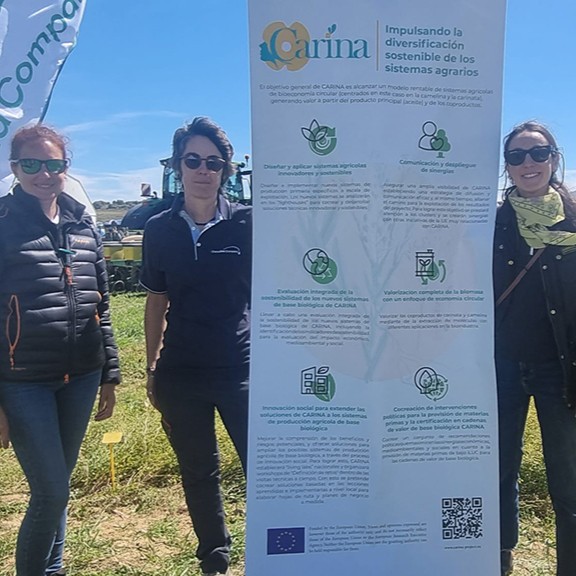
On 13 May 2026, a camelina knowledge transfer workshop was held in Grañén-Albero Bajo (Huesca, Spain) within the framework of CULTIVA 2026, one of Spain’s leading events dedicated to innovation in extensive agriculture.
The workshop was organised in collaboration between Cooperativas Agro-alimentarias de Aragón (FACA) and Camelina Company (CCE) and brought together farmers, technicians and industry representatives interested in camelina cultivation and sustainable crop diversification.
During the event, representatives from CCE, FACA and Cereales Teruel presented ongoing activities and results from the CARINA project. Technical discussions addressed the agronomic characteristics of camelina and practical recommendations for its cultivation under Mediterranean conditions.
The event also highlighted camelina’s potential within crop rotations and its possible applications in biofuel production and other industrial value chains. Through participation in initiatives such as CULTIVA 2026, CARINA continues to support knowledge transfer and collaboration between research, industry and the agricultural sector.
Demonstration Day Showcases Sustainable Crop Diversification Approaches
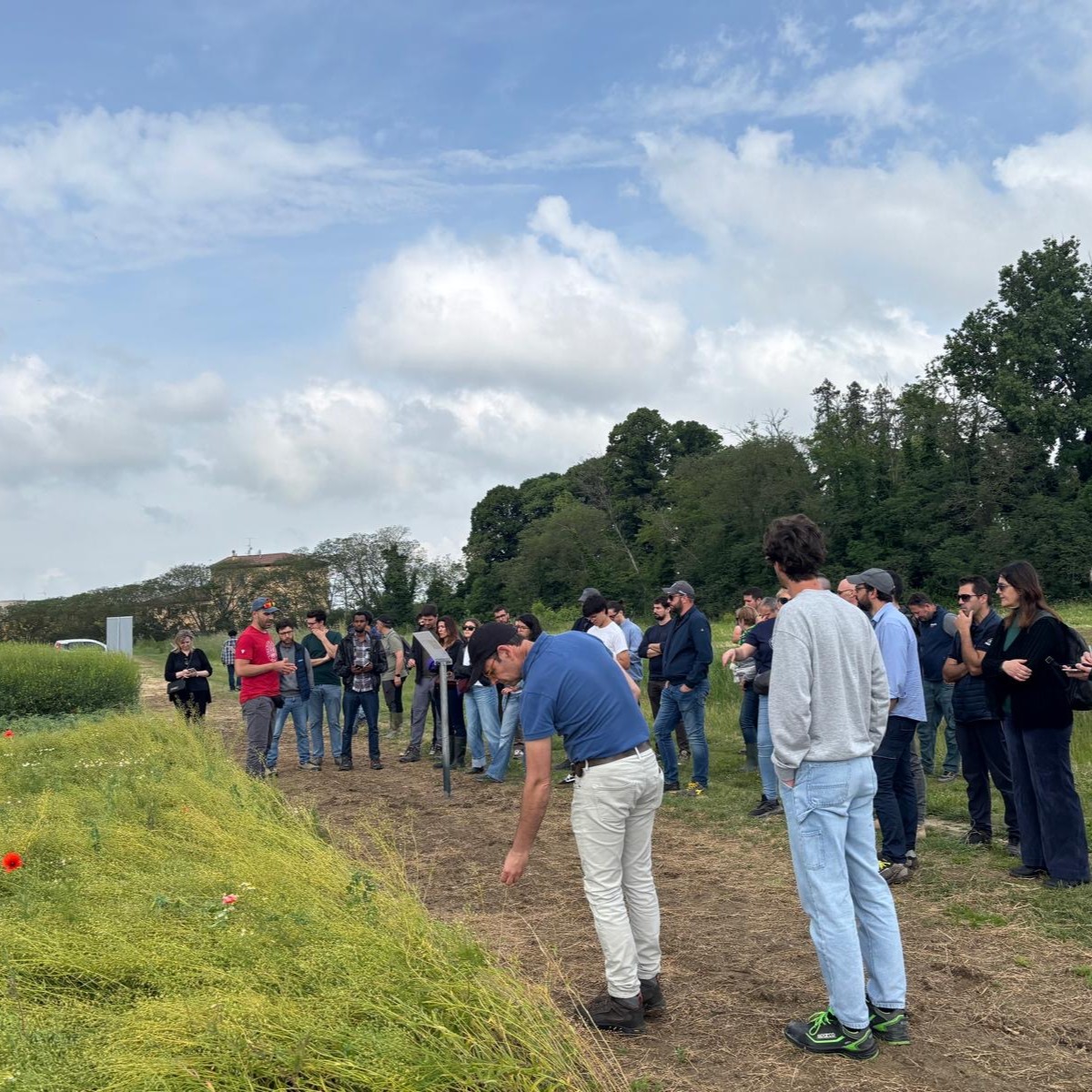
On 8 May 2026, the CARINA project held a demonstration day at the Experimental Farm A.U.B. of the University of Bologna in Cadriano, Italy, bringing together around 70 participants from across the agricultural sector.
The event welcomed a diverse audience, including farmers, sector experts, breeders, representatives from seed consortia, seed industry technicians, livestock farmers, students and project partners. High school students also participated through integrated educational activities.
The main objective of the demonstration day was to present the ongoing CARINA field trials and discuss the role of camelina and carinata in supporting more sustainable and diversified agricultural systems. Particular attention was given to intercropping and double-cropping systems, with discussions focusing on both their opportunities and practical implementation challenges.
The event created a valuable platform for exchange between research, education and agricultural practice, supporting CARINA’s broader objective of promoting resilient, low-input and sustainable farming systems across Europe.
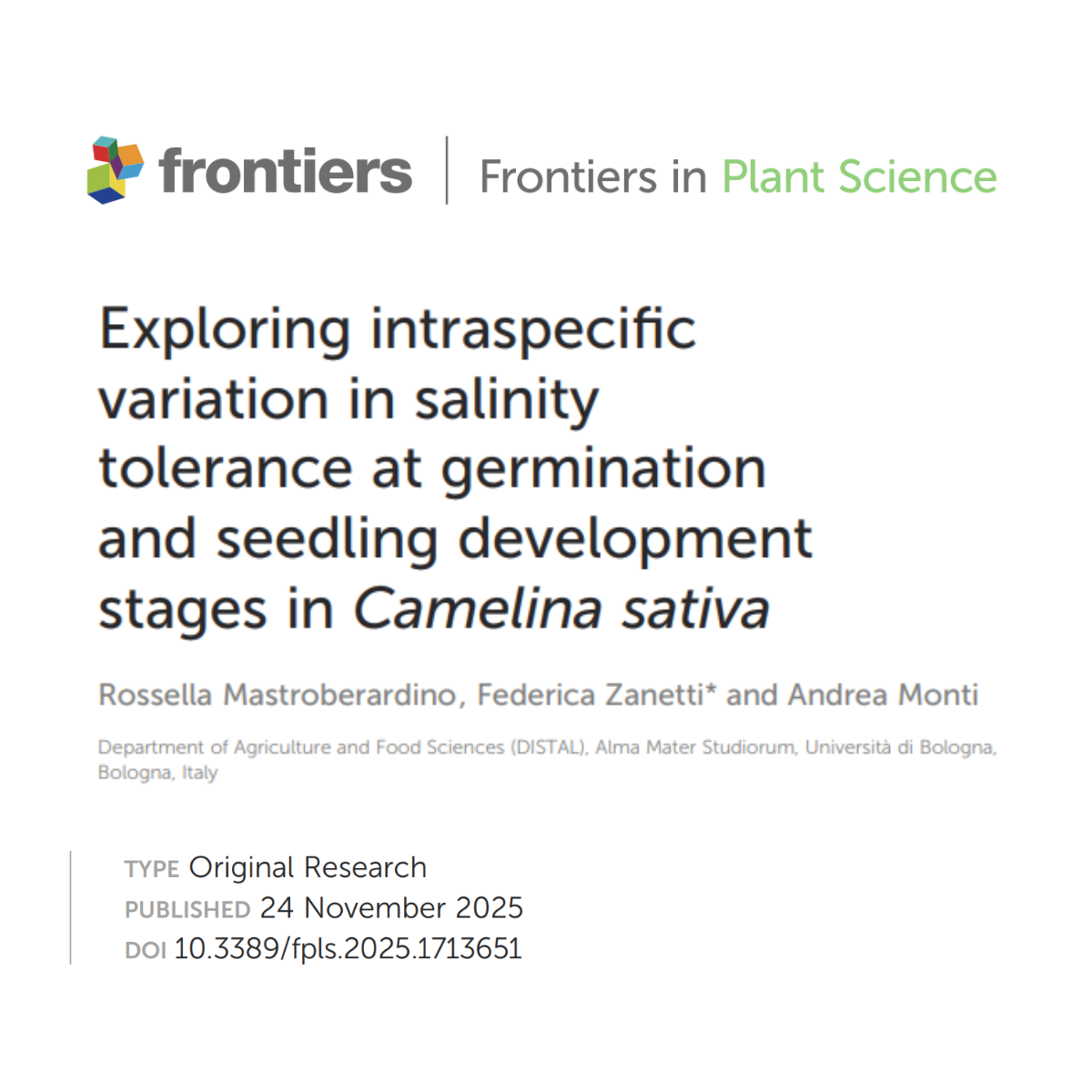
CARINA publication explores salinity tolerance in camelina at early growth stages
Another study developed within the CARINA project, titled “Exploring intraspecific variation in salinity tolerance at germination and seedling development stages in Camelina sativa”, examines how different camelina varieties respond to salinity during germination and early seedling development.
The study evaluated a wide range of camelina accessions under controlled saline conditions, focusing on their ability to germinate and grow during the early stages of development. The results show that while many accessions maintain high germination rates under salinity, their subsequent growth performance can vary significantly.
Three main response patterns were identified, reflecting different adaptation strategies. Some varieties showed delayed but strong development, others combined lower germination with moderate growth, while some germinated quickly but performed less well during later stages.
These findings highlight that salinity tolerance in camelina depends on the growth stage and underline the importance of evaluating both germination and seedling development when selecting suitable varieties.
The results contribute to ongoing research supporting the use of camelina as a crop for saline and marginal environments and provide useful insights for breeding and crop selection.
Read the full publication here: https://doi.org/10.3389/fpls.2025.1713651

New CARINA publication on camelina performance in salt-affected Mediterranean soils
A recent publication from the CARINA project, titled “On Farm Camelina Performance on Salt-Affected Mediterranean Coastal Soils: Evidence from Northeastern Italy”, presents field-based research on camelina cultivation under saline Mediterranean conditions.
The study is based on a two-season on-farm trial in northeastern Italy, comparing camelina cultivation at a non-saline inland site and a saline coastal site. Results show that soil salinity can vary significantly during the growing season, increasing notably during later growth stages.
Despite these changing conditions, some camelina lines maintained stable seed yields under saline conditions, while others showed reduced performance. The findings also indicate that changes in salinity over time, rather than absolute levels alone, play an important role in determining crop outcomes.
Overall, the study provides field-based evidence of camelina’s potential as a diversification crop for moderately salt-affected environments. It also highlights the importance of selecting suitable crop lines and considering seasonal salinity dynamics in crop planning.
Read the full publication here: https://doi.org/10.3390/agronomy16030340
The 7th CARINA Newsletter Is Now Available
The CARINA project has published its 7th newsletter, bringing together the latest updates from across the consortium.
This edition features recent project activities, scientific publications, dissemination events and stakeholder engagement initiatives, highlighting ongoing work to promote camelina and carinata as sustainable crops supporting diversified agricultural systems and Europe’s bio-based economy.
Whether you have been following CARINA from the beginning or are discovering the project for the first time, the newsletter provides a concise overview of our latest progress and achievements.
Read the newsletter here.
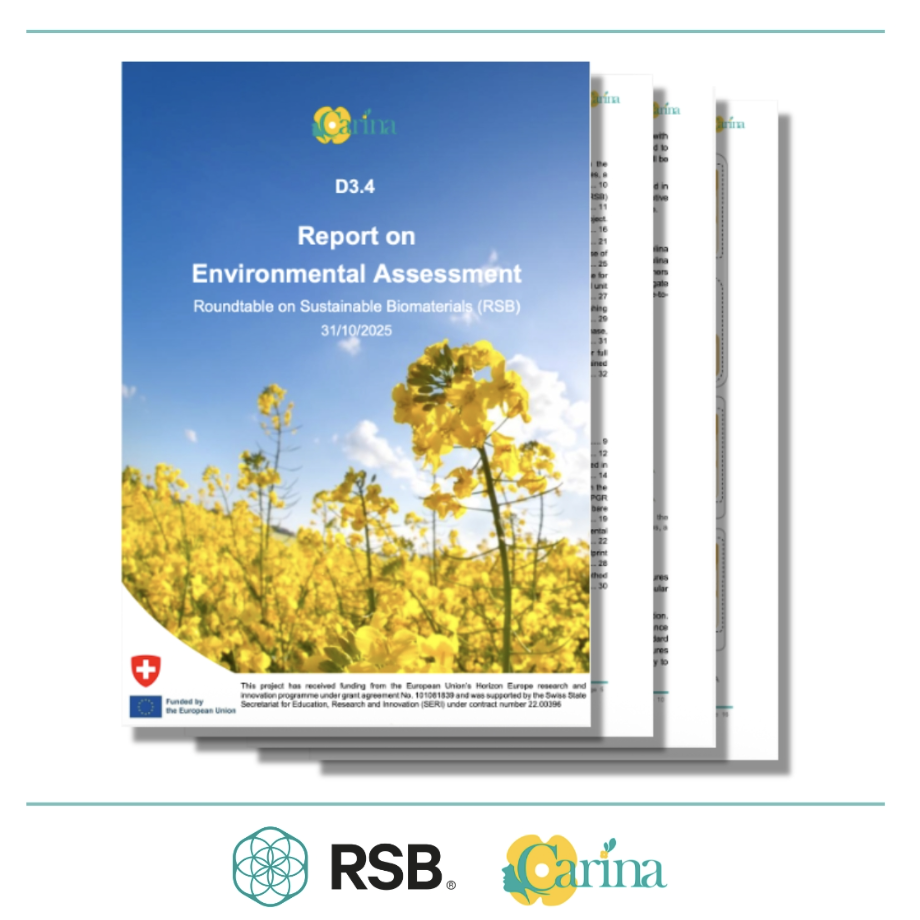
CARINA Environmental Assessment Report Highlights the Importance of Context-Specific Bio-Based Value Chains
Project partner Roundtable on Sustainable Biomaterials (RSB) has published a new article presenting key findings from the CARINA Environmental Assessment Report (D3.4), focusing on sustainability pathways for bio-based value chains.
The report combines Life Cycle Assessment (LCA) with the RSB Principles & Criteria framework to assess environmental, social and economic aspects of camelina-based production systems. The research particularly examined camelina cultivation on marginal land and analysed how regional conditions, farming practices and value chain integration influence sustainability outcomes.
Among the main findings, the study highlights:
• the importance of integrating camelina strategically within existing agricultural systems,
• the role of fertilisation practices as a major environmental hotspot,
• and the need for context-specific approaches rather than universal solutions for sustainable bioeconomy development.
The report also emphasises that the same feedstock can produce different sustainability outcomes depending on local agronomic, economic and regulatory conditions, underlining the importance of robust sustainability assessment frameworks and credible certification systems.
The article demonstrates how CARINA contributes to the development of scientifically grounded and practically applicable pathways for sustainable bio-based value chains in Europe.
Read the full article here: https://rsb.org/2026/04/21/carina-environmental-assessment-report-context-specific-strategies-for-bio-based-value-chains/
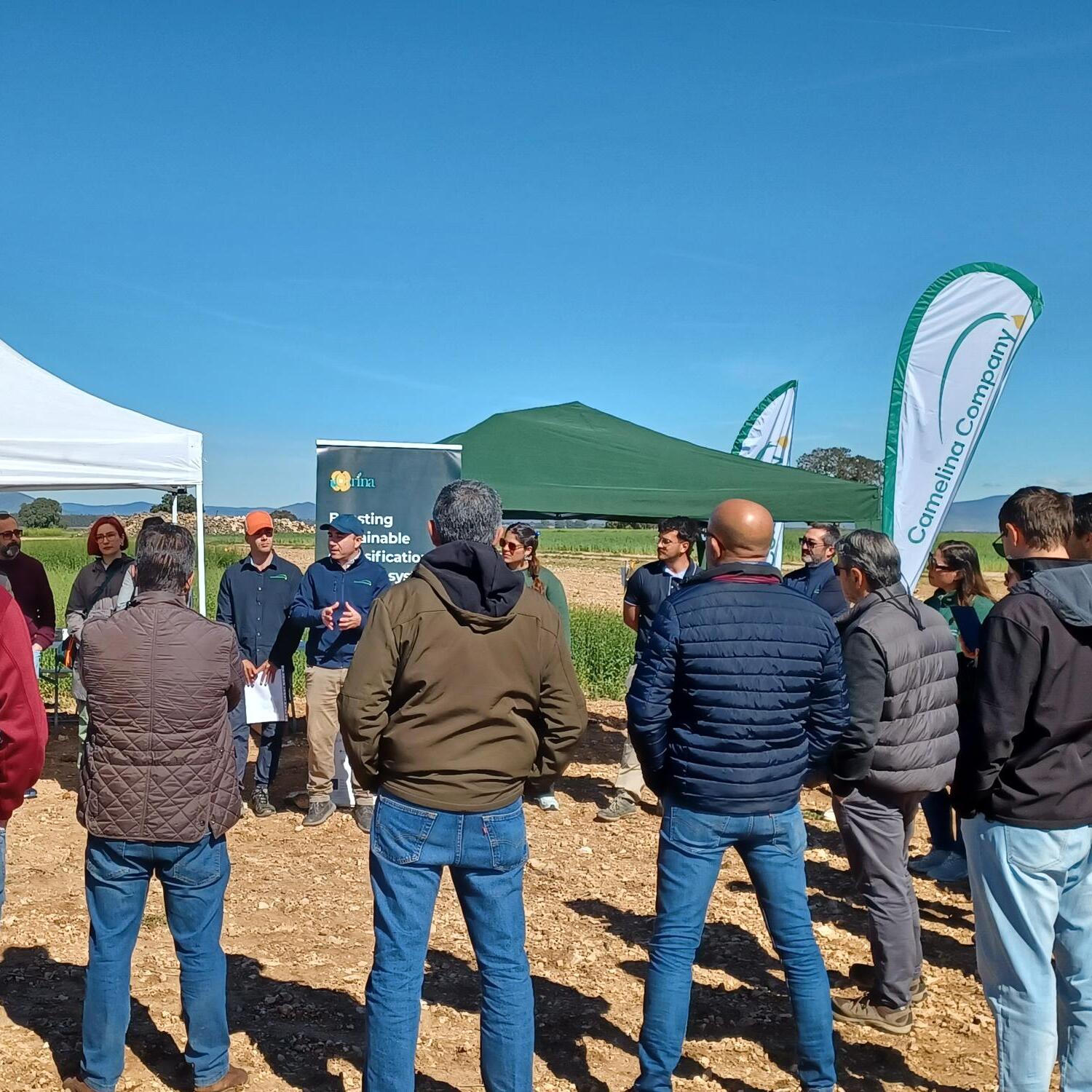
CARINA Open Day in Daimiel Showcases Camelina Field Trials
On 14 April 2026, an open day dedicated to camelina cultivation took place at the Innovation Centre of Daimiel in Ciudad Real Spain. The event was organised by Camelina Company within the framework of the CARINA project, in collaboration with Cooperativas Agro-alimentarias de Castilla-La Mancha.
The initiative aimed to present ongoing research activities related to camelina cultivation and to introduce participants to the trial fields located at “Las Encinas”. Cooperative members interested in crop diversification and innovative agricultural solutions attended the event. During the field visit, Camelina Company technicians presented several commercial variety trials and demonstrated differences linked to sowing dates, seed densities and crop management practices, including fertilisation and crop protection approaches. Participants also had the opportunity to exchange experiences and discuss the role of camelina as a low-input crop suitable for diversified and resilient agricultural systems.
PULS Realeases a Video Highlighting the Potential of Camelina and Carinata
The Faculty of Agriculture, Horticulture and Biotechnology at Poznań University of Life Sciences (PULS) has created a video presenting the project objectives and the potential of the crops.
The video explains how camelina and carinata can be incorporated into existing cropping systems, creating new opportunities for farmers while supplying sustainable feedstocks for bio-based industries. It also highlights their contribution to crop diversification, resource-efficient land use, and the development of innovative bio-based products that support a circular economy.
Discover how the CARINA project is helping shape the future of sustainable agriculture. By integrating innovative oilseed crops like camelina and carinata into diversified farming systems, CARINA supports more resilient and diversified farming. Watch the video and learn more:

UNTWIST Plant Adaptation Hub now available to support camelina research and cultivation
The UNTWIST project has officially launched the Plant Adaptation Hub, a new online platform designed to support research and innovation in camelina. The hub provides access to a wide range of data, tools, and resources aimed at advancing climate-resilient crop development and sustainable agricultural practices.
The platform brings together genetic, phenotypic, and environmental data, enabling users to explore and analyse key characteristics of camelina. It also offers tools for data analysis, visualisation, and comparison, supporting scientists, breeders, agronomists, and industry stakeholders in their work.
By facilitating access to research outputs and datasets, the hub contributes to improving crop performance, supporting precision breeding, and enhancing decision-making in agriculture. It represents an important step towards strengthening collaboration and knowledge exchange within the camelina research community.
Initiatives such as the UNTWIST Plant Adaptation Hub complement the objectives of the CARINA project, which focuses on promoting resilient, low-input oilseed crops and building sustainable bio-based value chains.
The platform is available at: www.camelina-hub.org

2nd International Camelina Conference (ICC Málaga July 2026)
The 2nd International Camelina Conference (ICC Málaga 2026) will take place on 10–11 July 2026 in Málaga, Spain, bringing together leading experts and stakeholders from across the camelina value chain.
Participants will have the opportunity to attend the conference either onsite in Málaga or online, making the event accessible to a global audience.
As camelina continues to gain recognition as a sustainable oilseed crop, the conference will provide a platform to explore the latest scientific and technological developments supporting its role in food, feed, fuel, and industrial applications.
The programme will cover a wide range of topics, including genetics and molecular breeding, plant physiology, agronomy, environmental adaptability, oil quality, biotechnology, and policy. Participants will include researchers, breeders, farmers, industry representatives, and policymakers, fostering a multidisciplinary exchange of knowledge and experience.
ICC Málaga 2026 will also offer valuable opportunities to build international partnerships, strengthen collaboration, and address key challenges and opportunities related to the large-scale deployment of camelina.
Conference website: https://www.icc2026malaga.com/ICC2026